

From paper tickets and manual checks to automated entry and cashless payments, parking management has come a long way. Smart parking systems streamline vehicle entry, payment, monitoring, and reporting, while traditional setups rely more on staff supervision and manual processes. Each approach offers different benefits, so the right choice depends on your facility’s needs, traffic flow, and operational goals.
What Is a Smart Parking System?
A smart parking system automates key car park operations to reduce manual work, improve traffic flow, and make parking more convenient. It combines technologies such as License Plate Recognition (LPR), bay sensors, parking software, and digital payment options to manage vehicle entry, space availability, transactions, and exit.
With a central dashboard, operators can monitor occupancy, revenue, and parking activity in real time, while drivers can pay by card, e-wallet or QR code instead of queuing at a payment booth. HITEC International’s SPiD Smart Parking solution integrates parking software and hardware, including barriers, card dispensers, retrievers, and related accessories, to support a connected parking process.
Traditional parking management, by contrast, relies more heavily on attendants and manual equipment. Staff issue tickets, collect payments, operate barriers, and patrol parking areas. This can suit smaller car parks with predictable traffic, but growing demand and changing staffing needs can make manual operations harder to manage efficiently.
What Is The Difference Between Smart Parking and Traditional Parking?
Smart parking automates key operations, while traditional parking relies more on staff and manual processes. Here’s how the two approaches compare.
Parking Space Monitoring
Smart systems track parking availability in real time using sensors and cameras. Traditional sites depend on attendants counting vehicles or walking the floors. Automated monitoring provides more timely availability information, while manual checks may already be out of date.
Entry and Exit Management
Smart parking systems read license plates or access credentials and open barriers automatically. This helps vehicles move through entry and exit points with fewer delays. Traditional entry points may require a ticket pull, a cash handover or a guard's approval, which can slow traffic during peak hours.
Payment Processing
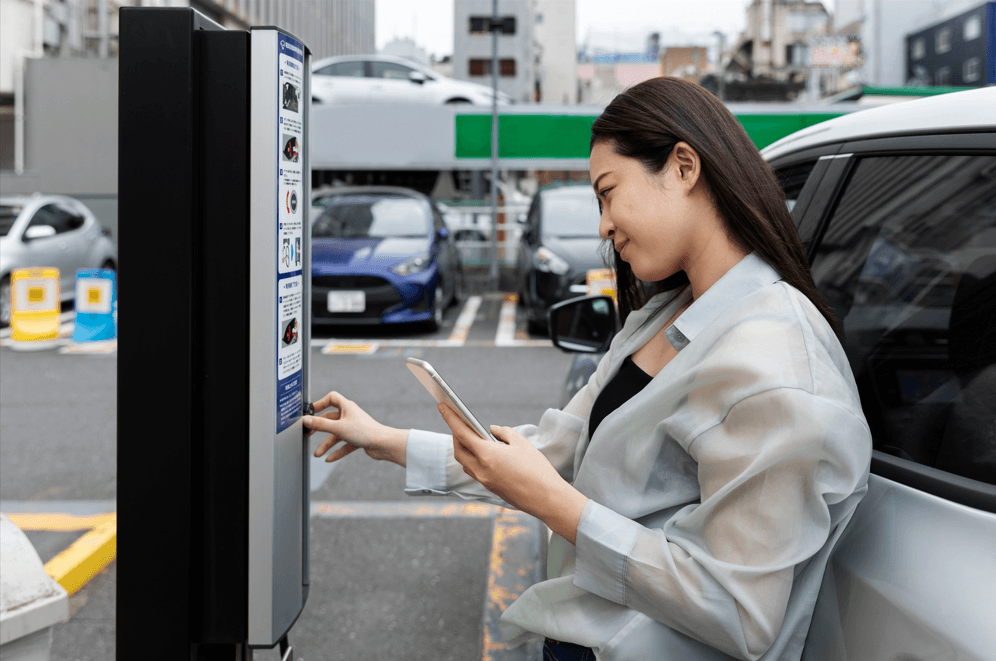
Smart parking accepts cashless and contactless payments through pay stations or mobile applications. Fees can be calculated automatically, including different rates for different users. Traditional parking relies more heavily on cash and manual receipts, which can lead to counting errors and longer queues.
Parking Guidance
Smart systems with parking guidance features can direct drivers to available bays using signage and indicators, reducing the time spent searching for parking. Traditional car parks generally rely on painted arrows, directional signs, and attendants. Visitors unfamiliar with the site may need additional assistance.
Security and Access Control
Smart systems can log vehicle entry and exit times, often with images or license plate information. Access can also be limited by permit, tenant, or time of day. Traditional security relies on guards and manual logs, sometimes supported by CCTV. Digital records can make parking activities easier to review after an incident.
Data Collection and Reporting
Smart parking produces reports on occupancy, peak periods, revenue, and average stay. These figures support pricing, staffing, and expansion decisions. Traditional management may also collect little usable data, but manual recording can take more time and effort.
Staff Requirements
Smart systems reduce the number of attendants at certain entry, exit, and payment points, freeing staff for customer service and supervision. Traditional operations require more direct staff involvement in these activities. Labor costs therefore depend on the size of the facility, operating hours, and level of automation.
What Are the Limitations of Traditional Parking Management?
Traditional parking management can become harder to manage as vehicle traffic grows, often leading to longer queues, manual errors, and limited visibility into parking activity. Common challenges include:
- Long queues at entry and exit during peak periods
- Payment discrepancies and errors from manual counting
- No real-time view of available parking spaces
- Limited records for resolving disputes or investigating incidents
- Heavy reliance on staffing levels and individual performance
- Time-consuming data collection for pricing and capacity planning
These challenges stem from the limitations of manual processes, not necessarily the performance of parking attendants. As traffic increases and user expectations rise, manual systems can become less efficient and harder to scale.
When Should Businesses Consider a Smart Parking System?
Businesses should consider a smart parking system when manual processes start affecting operational efficiency, revenue accuracy, or the parking experience. As vehicle traffic grows and parking needs become more complex, automation can help simplify daily operations and improve visibility.
Common signs that an upgrade may be worthwhile include:
- Recurring Queues: Delays at entry and exit points during busy periods.
- Parking Availability Complaints: Drivers struggle to find open spaces or get accurate information.
- Payment Discrepancies: Differences between vehicle counts and parking collections are difficult to explain.
- Growing Parking Demand: More tenants, employees, or visitors put pressure on existing processes.
- Demand for Contactless Payments: Users expect faster, more convenient payment options.
An upgrade may also make sense when opening a new hotel or office facility, or when rising labor costs prompt a review of operating expenses. If a car park refurbishment or extension is planned, incorporating the required cabling and equipment during construction can also help streamline installation.
How to Choose Between Smart Parking and Traditional Management
Start with your own site rather than with the technology. Four considerations can help determine the right approach.
Assess Parking Capacity
Count the available bays and note peak occupancy. Small car parks with low turnover may operate well with traditional methods. Larger or multi-level sites usually have more to gain from automation, as small delays can affect hundreds of vehicles.
Identify User Types
List who uses the parking facility: staff, tenants, hotel guests, short-stay visitors, or delivery drivers. Mixed user groups often need different rates, permits, and access rules. Smart systems can manage these requirements through configurable settings.
Review Existing Infrastructure
Examine the barriers, cabling, lighting, network coverage, and entry layout. Some equipment can be retained if compatible, while other components may need replacing. A site survey will help identify what is feasible and where additional costs may arise.
Consider Integration and Scalability
Check whether the system can connect with existing access control, billing, or building management software. Consider whether it can support additional lanes, new levels, or multiple properties. A flexible platform may reduce the need for extensive system changes as parking requirements grow.
Why Choose Us For Smart Parking Systems?
HITEC’s SPiD Smart Parking solution is built for offices, hotels, and commercial properties that want smoother entry, simpler payment, and clearer visibility of their car park. We start by understanding how your property operates, then recommend a system that fits your capacity, users, and plans for growth.
If your comparison points towards an upgrade, the next step is to see what a connected system can do for your site.
Make the Right Choice for Better Parking Management
Smart parking systems and traditional parking management differ mainly in how they handle entry and exit, payments, monitoring and daily operations. While traditional methods rely more heavily on manual processes, smart systems offer greater automation and access to operational data.
The right approach depends on the facility’s parking capacity, vehicle volume, operational requirements, and plans for future growth. Evaluating these factors can help businesses determine whether their existing processes remain suitable or an upgrade is needed.
For businesses considering an upgrade, HITEC International’s Smart Parking Solutions offer options to support more efficient parking operations.
Frequently Asked Questions About Smart Parking Systems
Can an existing car park be upgraded to a smart parking system?
Yes. Many existing parking facilities can be assessed for smart parking upgrades. Some equipment may be retained if compatible, while other components may require replacement or integration with new technology.
How much does it cost to install a smart parking system?
Costs depend on the size of the parking facility, equipment requirements, software features and existing infrastructure. A site assessment can help determine the necessary components and estimated investment.
How long does it take to install a smart parking system?
Installation timelines depend on the number of entry and exit points, existing infrastructure, and system requirements. Multi-level facilities with additional equipment and integrations may require more extensive work. A site survey provides a more reliable timeline.
What equipment is needed for a smart parking system?
Typical equipment includes entry and exit barriers, LPR cameras, pay stations, and management software. Larger sites may add bay sensors, guidance signage, and network upgrades. The exact setup depends on your layout and goals.