

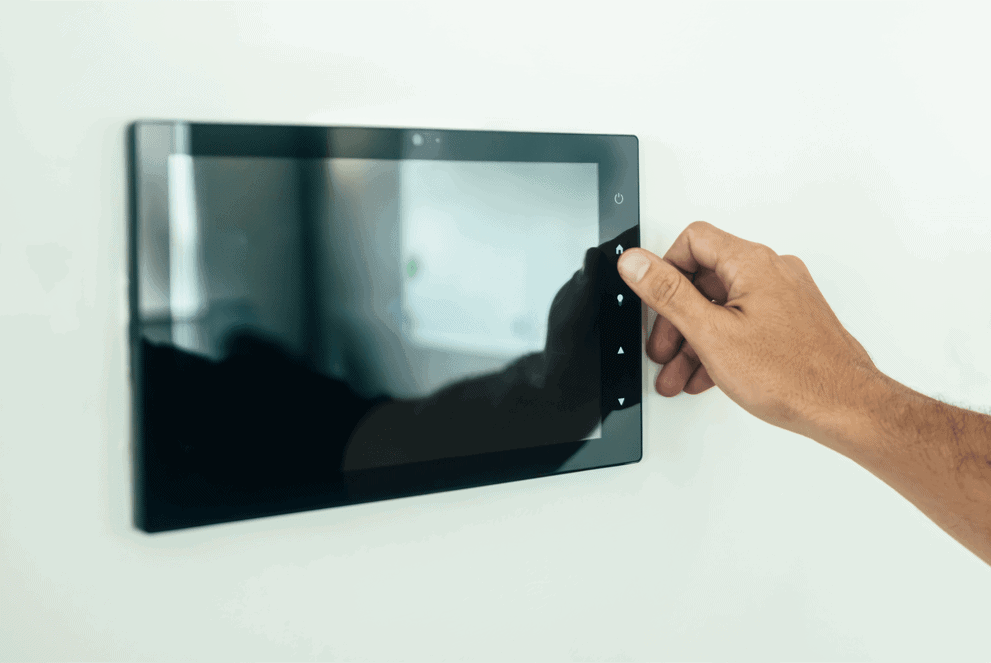
Traditional hotel rooms often rely on separate controls for lighting, air-conditioning, curtains, and other functions. Smart room automation brings compatible systems together, allowing guests to manage their room more conveniently while helping hotels coordinate selected functions.
For hotels planning new developments, renovations or room upgrades, smart room automation can shape both the guest experience and day-to-day room management. Explore Zennio Smart Room Automation Philippines through HITEC’s integrated technology solutions to see how connected room controls can support your hotel’s needs.
Traditional Room Control Systems in Hotels
Traditional hotel room controls manage lighting, air-conditioning, curtains, and entertainment systems through separate switches, thermostats, and remotes. Each device operates independently, so guests must use different controls to adjust their room settings.
Common examples include:
- Individual Lighting Switches: Control specific lights or lighting circuits without coordinating with other room functions.
- Standalone Thermostats: Regulate air-conditioning settings independently of lighting or curtain positions.
- Manual Curtains and Blinds: Require guests to open or close window coverings themselves.
- Separate Entertainment Controls: Use dedicated remotes for televisions and other in-room equipment.
Although familiar and easy to use, this setup offers limited coordination between room functions. Adjusting several settings may require multiple steps, while hotel staff have less opportunity to manage compatible systems through a centralized interface.
What Is Smart Room Automation?
Smart room automation connects compatible hotel room functions through a coordinated control system. Guests can manage lighting, air-conditioning, curtains, and other features through wall-mounted controls or touchscreens.
Behind the scenes, controllers, sensors, and software coordinate selected functions based on predefined settings. Depending on the system, integration with hotel management platforms can also support room management and operational workflows.
The key difference is integration, allowing hotels to coordinate multiple room functions through one control system. This can be tailored to operational needs and guest expectations.
Smart Room Automation vs Traditional Hotel Room Controls
The main difference between traditional hotel room controls and smart room automation is how room functions are managed. Traditional setups use separate controls for individual devices, while automation connects compatible systems to coordinate selected functions through a unified interface.
Key differences include:
- Control and Interface: Traditional rooms use separate switches, thermostats, and remotes, while automation can consolidate compatible functions into wall-mounted controls or touchscreens.
- Room Function Coordination: Traditional controls operate lighting, air-conditioning, and curtains independently. Automation can coordinate these functions through predefined settings.
- Configuration and Flexibility: Traditional settings are adjusted individually, whereas automation allows hotels to configure coordinated room settings around their operational needs and guest preferences.
How Smart Room Automation Works in a Hotel Room
A connected room can respond to guest actions and predefined hotel settings. The exact experience depends on the installed equipment and integrations.
Guest Entry and Room Activation
When a guest enters or activates a room, configured systems may adjust selected lighting or climate settings. This could involve a room-entry switch, key-card system, or compatible occupancy sensor.
Adjusting Room Settings
Guests can use connected interfaces to adjust lighting, temperature, curtains, and other supported functions. Some interfaces also provide access to predefined scenes, allowing several settings to change through a single command.
Room Service Request
Where supported, a guest-facing interface may provide access to selected hotel services, including room service requests. This requires the appropriate software and operational integration; room automation alone does not guarantee that service ordering is available.
Housekeeping Coordination
Compatible systems may communicate Do Not Disturb (DND) or Make Up Room (MUR) status to hotel staff. This can help housekeeping teams coordinate visits and respond to guest preferences.
Room Deactivation After Checkout
Following checkout, an integrated system may apply predefined settings to selected functions, such as lighting or air-conditioning. These settings can help prepare rooms for the next stay while managing unnecessary operation between occupancies.
Benefits of Smart Room Automation for Hotels
Smart room automation helps hotels coordinate room functions, improve guest convenience, and manage energy use more effectively. By connecting compatible systems, hotels can create more personalized room experiences while streamlining selected operational tasks. The benefits depend on the features installed and how they are configured.
More Efficient Energy Management
Occupancy-based lighting and climate controls can reduce unnecessary energy use when rooms are unoccupied. Actual savings depend on room occupancy, existing equipment, and control settings.
Greater Guest Convenience and Personalization
Guests can adjust lighting, temperature, and curtains through a unified interface, while predefined scenes allow hotels to tailor room settings to different room types or guest preferences.
Smoother Hotel Operations
Integration with compatible hotel management systems can help staff access selected room-status information and coordinate housekeeping or maintenance tasks more efficiently.
Reduced Manual Adjustments
Automated settings can reduce the need for staff to adjust room functions individually, helping simplify routine tasks. The extent of these benefits depends on the level of integration and existing hotel procedures.
Zennio Smart Room Automation for Hotels
Zennio provides KNX-based room automation solutions for hospitality environments. Through HITEC International, hotels in the Philippines can explore room control components for projects involving new installations or upgrades.
The appropriate configuration depends on room layouts, electrical infrastructure, HVAC equipment, and the functions the hotel intends to automate.
Touch Controls and Touchscreens
Wall-mounted touch controls and touchscreens provide access to supported room functions through a consolidated interface. Hotels can select controls that suit their room design and operational requirements.
Room Controllers
Room controllers coordinate compatible devices and execute configured control logic. Depending on the architecture, they may manage functions such as lighting, climate control, and other connected equipment.
Integrated Lighting, Temperature, and Curtain Control
Compatible lighting circuits, thermostats, and motorized curtains can be coordinated within the same automation environment. This enables predefined scenes and consistent room settings, subject to the installed components and system configuration.
Explore Zennio Room Automation with HITEC International
Smart room automation connects compatible hotel room functions within a coordinated control system, helping improve guest convenience and streamline selected operations. The right solution depends on the property's requirements, existing infrastructure, and planned level of integration.
Hotel owners and developers should assess their requirements before selecting a solution. Planning a hotel development or refurbishment? Explore HITEC’s Zennio room automation solutions to discuss suitable controls for your project.
Frequently Asked Questions About Smart Hotel Room Automation
Does smart room automation require internet access?
Not necessarily. Some systems can operate local room controls without an internet connection, while remote monitoring, cloud services, or certain integrations may require connectivity. Requirements depend on the system architecture.
Can smart room automation be added to an existing hotel?
In many cases, yes. Feasibility depends on existing wiring, electrical infrastructure, HVAC compatibility, network capacity, and the functions required. A site assessment can identify installation constraints and potential costs.
Can different hotel room types use different automation settings?
Yes. Compatible systems can be configured for different room layouts, categories, and operating requirements. For example, suites may have separate lighting scenes or additional curtain controls compared with standard rooms.
When should hotels plan for room automation?
Ideally, during initial design or renovation planning. Early coordination helps align room controls with electrical layouts, lighting, HVAC equipment, and network infrastructure. For existing hotels, an assessment should establish whether a phased upgrade is practical.